
Mobile or Desktop application pentest

A mobile or desktop application pentest enables to perform specific tests on native applications (iOS, Android, Windows, Linux, MacOS) or hybrid applications, in order to assess and strengthen the security.
Aim of a mobile or desktop application pentest
Mobile applications are a weak point of information systems, due to the fact that many developers are not aware of security issues. While most mobile apps do not store sensitive information, they can manipulate personal data through APIs and act as gateways to servers.
In addition, mobile applications themselves, as well as desktop applications, can be attacked to be copied or corrupted. Therefore, in themselves, they are also an element to be protected for the companies that developed them.
A mobile application pentest tests the application itself, as well as the APIs and servers that host them. A pentest of the mobile or desktop application itself is particularly focused on cryptographic analysis and reverse engineering.
To define the scope of this type of pentest, the following questions must be answered:
- What are the greatest risks from a business point of view?
- In the case of a mobile application: must we focus the pentest on the API, or must we also pentest the application itself?
- In all cases: what is the level of exhaustivity sought for pentests?
Mobile application penetration testing
The security assessment of a mobile application includes
the study of the application’s logic, a technical analysis, and the
analysis of elements that could be extracted (reverse engineering). We
refer to static analysis and dynamic analysis.
Common vulnerabilities of mobile applications are related to the following:
- poorly stored data
- poorly secured network communications
- poorly configured interactions with the platform
- unsecure configuration (signature, debug, etc.)
Mobile API penetration testing
Mobile APIs are a security priority because they manipulate data and
communicate with servers. Securing the API is a necessary step (and the
most essential step) in securing a mobile solution.
An API pentest is similar to a Web application pentest, with regard to the tools used and the types of flaws sought.
Common vulnerabilities of APIs are related to the following:
- features that can be bypassed
- problems concerning rights and permissions
- the implementation and use of third-party components
Desktop application penetration testing
A desktop application penetration test is similar to a mobile
application penetration test, although the technologies used to develop
them are not necessarily the same.
Therefore, the vulnerabilities found are often linked to problems of storage or unsecured network communications.
If the desktop application does not communicate with the outside,
the main security tests are cryptographic analysis and reverse
engineering.
See What We Can Do For You
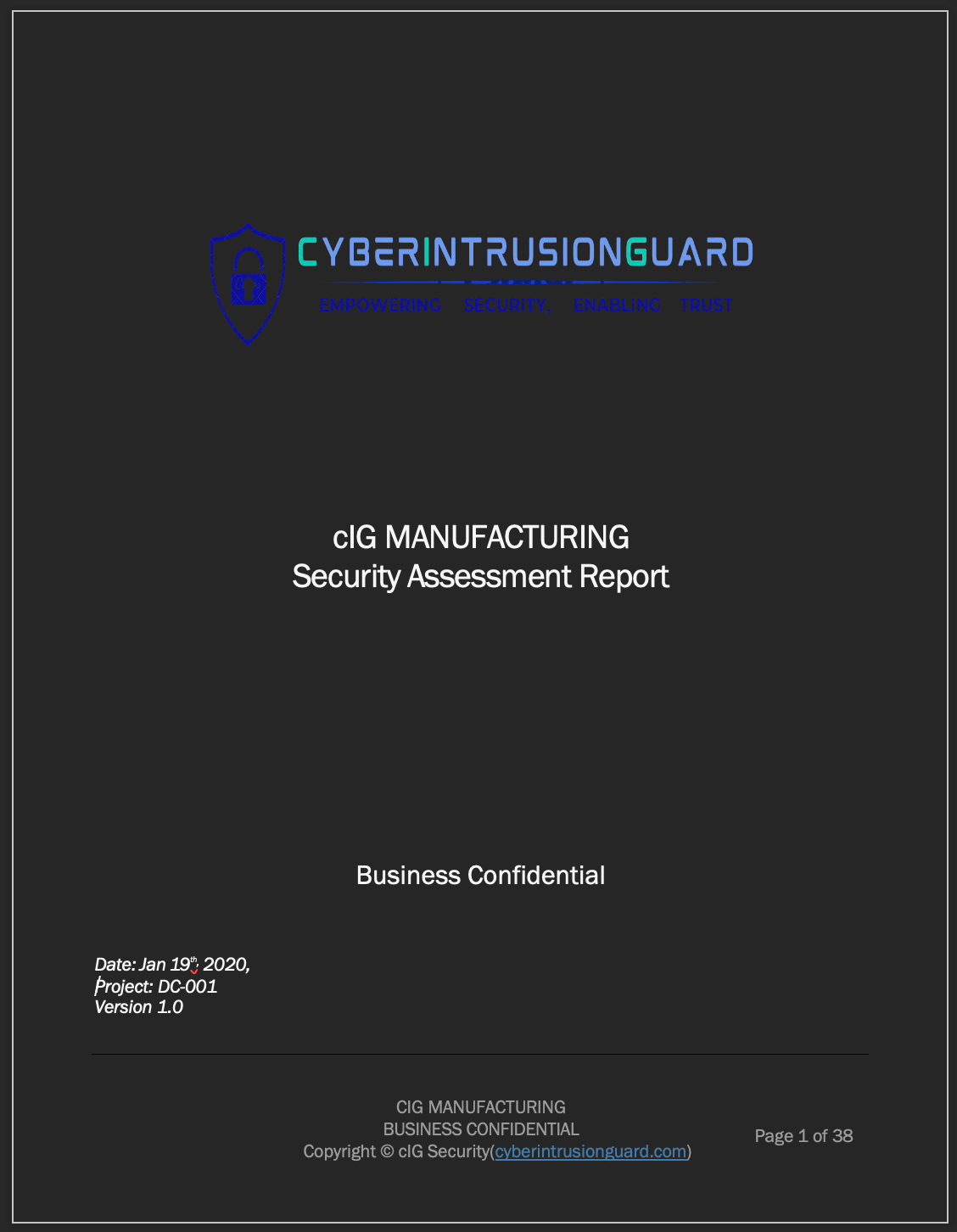
Download a sample penetration test report to see the results we can deliver for your organization.
Ready to Get Started?
See How We Can Secure Your Assets
Let's talk about how cIG can solve your cybersecurity needs. Give us a call or submit your information below and our representative will be in touch to help you build a more resilient security operation today.
Call Us On: +267 - 74657500 | Email: hello@cyberintrustionguard.com